CACAO

The scientific name for cacao fruit is Theobroma, literally translated as ‘food of the gods’ because of its ability to energize happiness by those who eat it. It’s that ‘feel-good’ experience you get by eating chocolate that comes from the cocoa beans. But studies have shown that it’s not just limited to the cocoa beans and Theobromine is abundant in the entire cacao fruit!

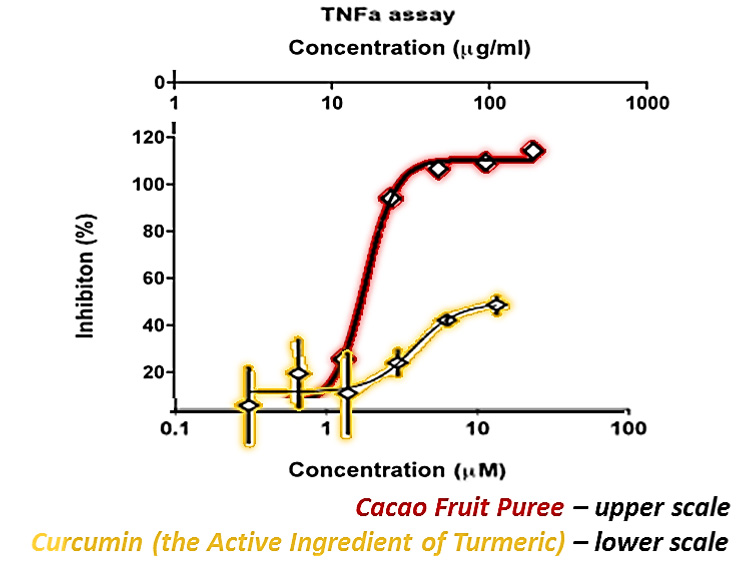
What’s more, cacao fruit is rich in antioxidants and very powerful anti-inflammatory properties, as well as nutritious vitamins and minerals. In fact, according to a recent 2015 study conducted by Brunswick Labs, scientists found that cacao fruit pulp, “abounds with proven antioxidant and anti-inflammatory effects.” Moreover, when compared to Curcumin (the active ingredient of Turmeric), they found that cacao fruit puree exhibited 6 – 8 times greater values with higher antioxidant and anti-inflammatory effects. Brunswick labs went on further to state, “The outlined pioneering testing results indicate that cacao fruit pulp abounds in functional constituents, which are responsible for its proven antioxidant and anti-inflammatory effects.”

But what does this really mean? Brunswick Labs Certified for ORAC 5.0 (Oxygen Radical Absorption Capacity), gives cacao fruit their highest value rating available for antioxidant and anti-inflammatory properties that is known:

  • to help blood vessels dilate, thereby carrying more oxygen to the brain and heart and increase performance.
  • to protect cells from aging

Add to this that cacao fruit contains Theobromine, Vitamin B6, Thiamin, Magnesium, flavonoids, and other phytonutrients, in addition to other vitamins, minerals and fibers and it’s easy to see why the cacao fruit was considered the ‘food of the gods’ and a superfood of the superfoods!

cacoprocess

OUR CACAO’s

CACAO BEANS

Cocoa beans are the almond-shaped seeds inside the fruit of the cacao tree, which is called a pod. As we’ll see, it’s an essential raw ingredient in the chocolate production chain.

Where do cocoa beans come from?

Cocoa pods grow on cacao trees (Theobroma cacao). This small tree of Mexican origin blossoms all year round. Its flowers are white and pink, but only some will produce fruit – about 1 out of every 500, in fact.

Theobroma cacao grows pods on both its branches and trunk. Growers have to be very careful not to damage the cacao tree when harvesting them. Because it’s such a delicate task, pods are picked by hand.

Cocoa beans’ composition

Each bean is made of about 50% of a fat called cocoa butter. The beans are 20% protein and also contain water, as well as a large amount of nutrients such as theobromine and vitamins. The beans also contain starch and other minerals.

Extracting the beans

Each pod contains 16 to 60 cocoa beans. You have to extract the fruit’s contents to get at its beans, in a process known as de-seeding.

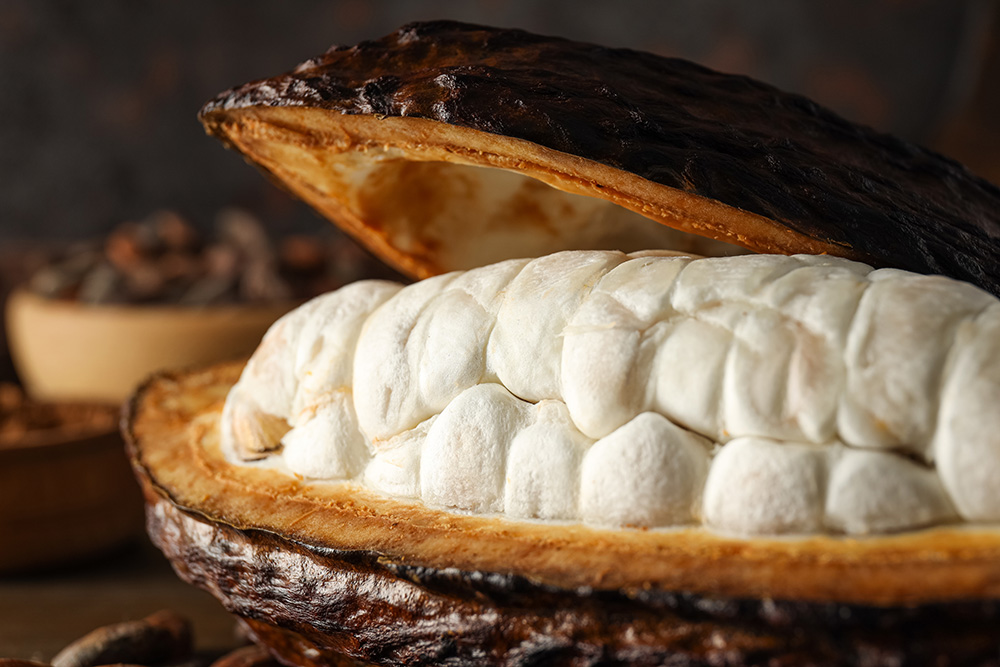
When fresh, beans look like seeds covered in a white, sticky pulp called mucilage. They can be eaten as they are. However, if we want to store them for later use, we have to ferment and then dry them. We can also roast them.

How to use cocoa beans

Cocoa beans are the starting point for all chocolate production. You can use the beans to make you own dark or milk chocolate bars. What’s more, if you love powerful, sophisticated bitter flavors, you can eat cocoa beans raw like you would a nut.

They retain all their nutrients this way, as they are uncooked and unprocessed. Raw beans are packed with health benefits, as we will see shortly. However, do bear in mind that these beans are very bitter and can’t be used as a substitute for dark chocolate.

Once roasted to help them develop all their cocoa flavors, the cocoa beans are extracted from their shell and ground into fine pieces, or nibs.

Professionals are using cocoa nibs more and more in their recipes. They give desserts a unique texture. They also have a very intense cocoa flavor. Their bitter notes are much sought-after for the unique taste they provide. They are ideal for flavoring recipes and adding taste and texture. Nibs work wonderfully in cakes, ganaches, ice creams and even chocolate bars.
CACAO BUTTER

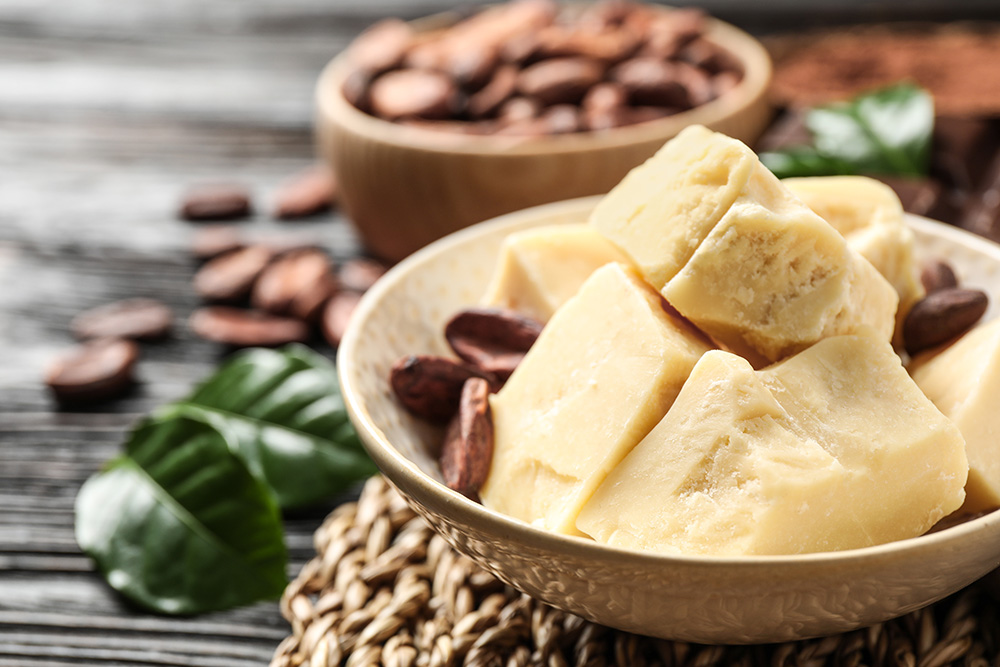
Cocoa butter is a 100% plant-based fat made from cocoa beans. It is a frequent ingredient in pastries and, most especially, in chocolate desserts. Valrhona would like to share all the secrets behind this little-known ingredient with a whole host of benefits.

What is cocoa butter?

Cocoa butter is a fat that occurs naturally in cocoa beans. It is mainly made up of lipids, or saturated and mono-unsaturated fatty acids.

Cocoa butter’s ivory-white color makes it easy to recognize. Most of the time it’s stored as a solid slab.

How do we make cocoa butter?

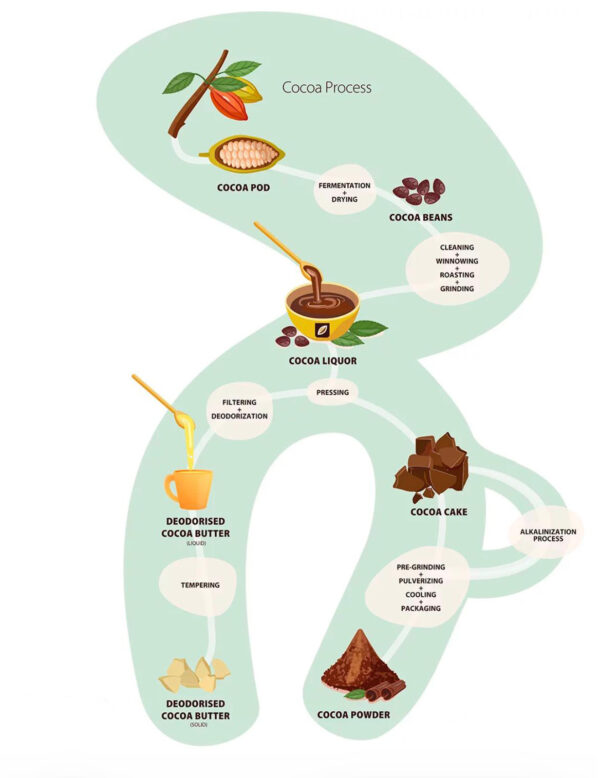
Cocoa butter is made from the cocoa beans sealed away in cacao trees’ pods. Once picked, cocoa pods are opened up by hand to extract the beans, which are then fermented and dried.

When this is done, the beans are roasted and shelled, and the cocoa is ground down into nibs. Nibs from one or more origins can be blended together depending on the recipe you are using, before being mixed and ground into cocoa paste (also known as cocoa liquor).

A hydraulic press is used to separate out the liquid “cocoa butter” from the solids (which go into making cocoa powder).

Cocoa butter is highly flavored when it has been pressed. It then goes through several extra processes, including filtrationdeodorization (which gives it its neutral flavor) and tempering.

Using cocoa butter

This natural fat is used as much by professionals as it is by the wider public. Cocoa butter offers lots of advantages in pastry-making and other forms of cooking.

Over the past few years, it has even found its way into our homes in various ways. Here are a few examples of cocoa butter’s uses.

Uses in desserts

Pastry chefs and chocolatiers are expert users of cocoa butter. Its melting point is about 99°F (37°C). It’s a useful part of the chocolate tempering process. After all, what would chocolate be without cocoa butter?

The lipids in cocoa butter give it its shiny appearance and melting texture. As you know, couverture chocolate is enriched with cocoa butter to make it more fluid and suited to certain uses, such as coating and molding.

This edible fat doesn’t give your preparations a cocoa flavor, hence why it can also be used for other recipes such as ice creams, spreads, desserts, and so on.

So that you can enjoy the best of chocolate, Valrhona follows European directives (2000/36/EC). We only use cocoa butter in our couverture chocolates, with no other added vegetable fats.

Uses in savory dishes

Although it might seem odd at first sight, cocoa butter has a really interesting role to play in cooking. This is because it’s a stable, odorless fat with a neutral flavor. Even better, cocoa butter doesn’t go off and stores perfectly.

Cocoa butter also withstands high temperatures, easily going as high as 392°F (200°C) without burning, unlike butter and certain oils. It enhances the natural flavor of a dish while perfectly preserving its character.

Did you know? Cocoa butter is suitable for vegan diets.

CACAO MASS / LIQUOR

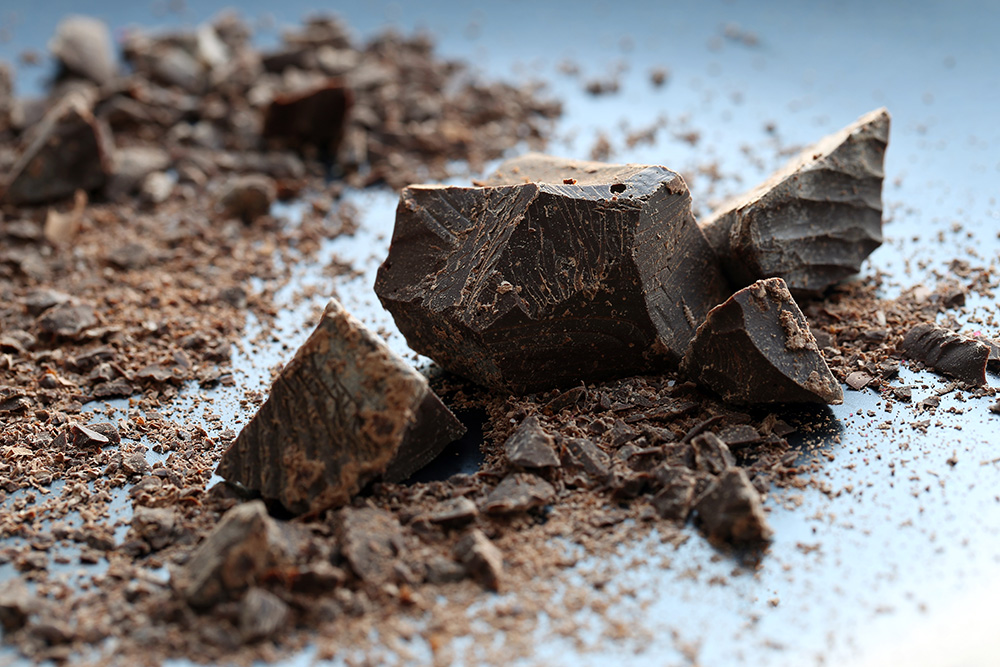
From the fermentation, roasting and refining of cocoa beans, a product called cocoa liqueur or cocoa mass is obtained. It consists of two main components, cocoa butter and dry cocoa. This liquor is the basic ingredient used to make all kinds of chocolates and, despite its name, does not contain alcohol.

Cocoa liquor is also known as cocoa paste or cocoa mass. It is a derivative of cocoa, coming from the grinding stage, which includes all the characteristic taste and aroma characteristics of roasted, chopped and groated cocoa beans. This paste is used in the production of chocolates.

The cocoa beans are fermented and left to dry. Then it goes through various processes. In these processes, all impurities are cleaned. The cleaned cores are processed to reduce the amount of moisture in boilers with various properties. At this point, there are changes in color and taste.

Some operations are carried out with special technological machines for the separation of the kernels from the shell. The groats are exposed to high temperatures in the grinding section, and the cocoa butter melts at this point and leaves the core. The crops formed at the end of this application are oily particles and have a solid-liquid appearance with fluid properties. These products obtained are called cocoa liqueur or cocoa mass.

Cocoa mass, the heart and soul of chocolate production, is a sumptuous blend of crushed cocoa beans that capture the rich essence of cacao in its purest form. This velvety concoction, created by grinding roasted cocoa nibs, is a key ingredient that brings depth, flavor, and a luscious texture to a variety of chocolate delights. As the foundation of both dark and milk chocolates, cocoa mass tantalizes the palate with its complex notes, ranging from earthy to fruity, while infusing each bite with the natural aroma of cacao. At World Wide Chocolate, we celebrate this exquisite component, showcasing how its quality and character can transform gourmet chocolate into an unforgettable experience that will transport you to the lush cocoa regions of the world.

CACAO POWDER

Of all the different forms cocoa can take, cocoa powder is certainly one of the most common. It can be used to decorate desserts and as an ingredient in luxurious recipes. Together, let’s find out about all the benefits cocoa powder has to offer.

How to make cocoa powder

To make cocoa powder, cocoa beans are removed from their pod, fermented, dried and roasted to bring out all their chocolatey flavor.

The cocoa bean’s flesh is separated from its shell and ground down. The next step – grinding – transforms the pieces into a kind of paste that can be used to make chocolate.

It’s thanks to cocoa paste that we can make cocoa powder. The paste is pressed to separate the powder from the beans’ natural fat, known as cocoa butter.

This gives us cocoa powder, on the one hand, with its low fat content and intense cocoa flavor, and fat-rich cocoa butter on the other. Cocoa butter is highly flavored when it has been pressed. Cocoa butter only takes on a neutral flavor when it’s deodorized.

How to use cocoa powder?

In both desserts and savory dishes, unsweetened cocoa powder has earned its place as a key ingredient. This intense, healthy ingredient helps us make lots of tasty dishes and desserts without upping the carbohydrate count.

Cocoa powder’s uses in desserts

A cocoa flavor is sought out in lots of dessert and cake recipes. Valrhona’s no-added-sugar cocoa powder gives your preparations a deliciously cocoa-rich flavor.

You can use this cocoa powder in intensely flavored tiramisus, cakes and chocolate brownies. Fitness fans can even add it to their water bottle or use it to make cocoa-rich protein bars to boost their energy levels and nutrition.

Cocoa powder can also be enjoyed at breakfast. Simply sprinkle it on your cereal or add it to a glass of milk or smoothie to enjoy all the health benefits and unique flavor of cocoa.

Cocoa powder can, of course, also be used in hot or cold drinks such as hot chocolate. To enjoy these at their best, however, it is best to sweeten them in order to bring out all the cocoa and milk’s mellow flavor.

Cocoa powder in savory dishes

As bizarre as it might sound, 100% cocoa powder can also work wonders in savory dishes. Cocoa powder is perfect for sauces and pairs beautifully with chicken and other poultry. A pinch of cocoa powder gives a dish that little bit of oomph along with a delicious bitter touch.

It can also be kept for a long time. Just keep it in a dry place away from heat, light and humidity. Make sure you don’t leave your cocoa powder near a heat source (such as a gas cooker or hot plates) so that the cocoa retains all its intense flavor and nutrients.